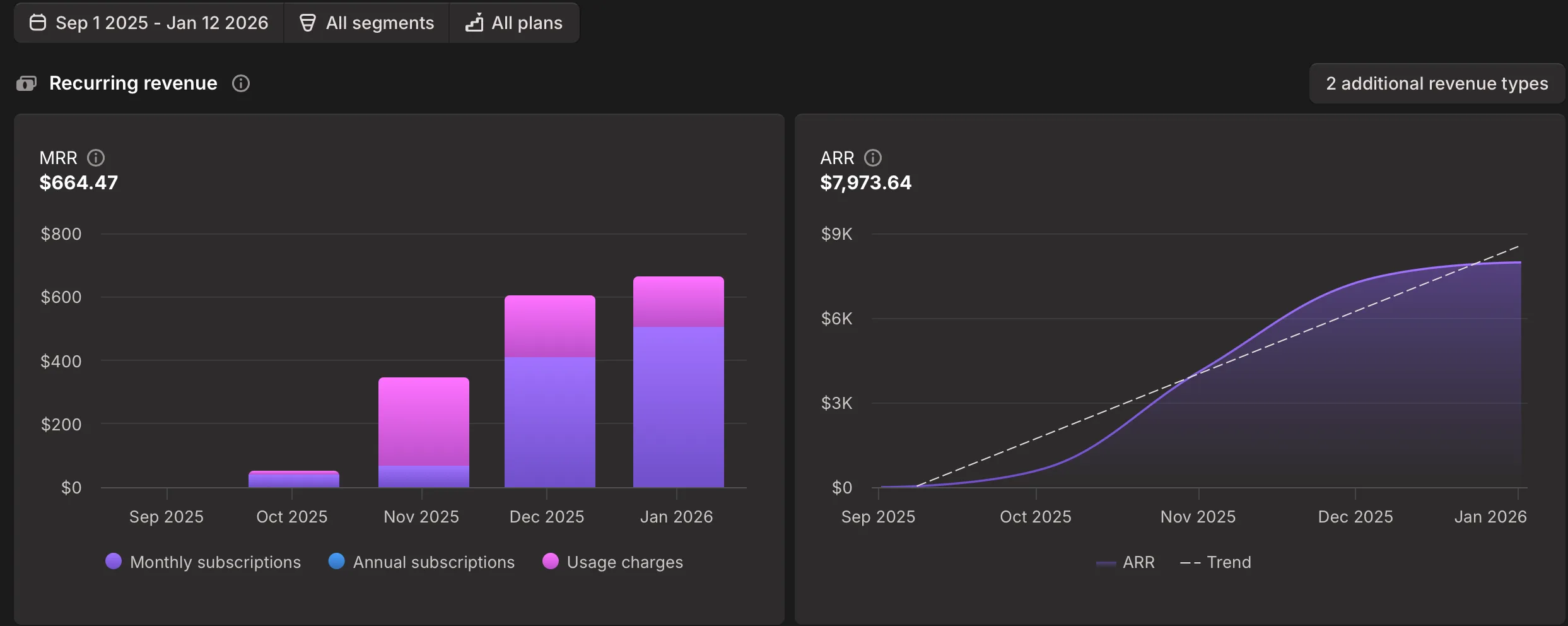
Building a virtual try-on Shopify app to $700 MRR
· 7 min read
3 months ago, the previous project I was working on (Elevora) got aborted as co-founders became unresponsive, so I had to think about what my next move would be. I had just spent the summer building the Elevora Shopify app, so I was up to date regarding Shopify apps.
One day, scrolling LinkedIn a few weeks after the release of Nano-Banana, I saw someone talking about virtual try-on powered by Nano-Banana.
So I opened Google AI Studio and started experimenting, and the results were impressive. Nano-Banana was good enough that the try-on results were realistic. Given my experience in Shopify building and my old project ready to be recycled, I had to package Nano-Banana into a Shopify app.
Building the POC was actually very fast. With Cursor and my Elevora project that I could just copy, it was pretty straightforward. It took me less than a week to have it ready, and around another week of back and forth with Shopify support to get it listed on the App Store. It got listed on September 27th.
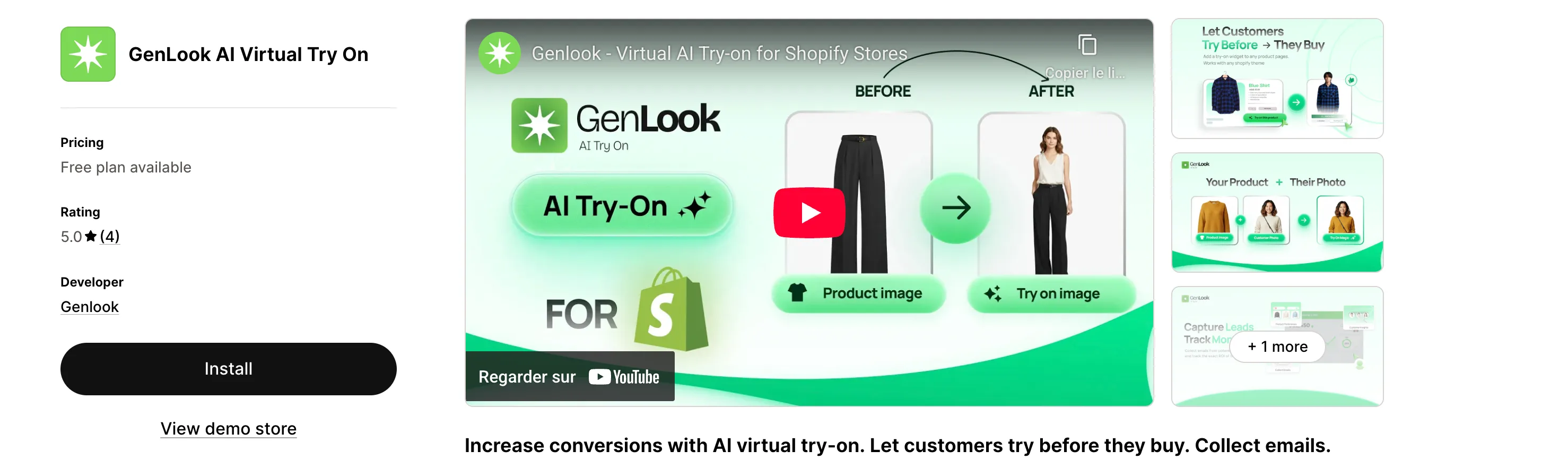
The easiest part was now done. Now the harder part for me as a technical Founder was to get it in the hands of customers. Good thing for me is that back in October, the competition on virtual try-on Shopify apps was very low, as the technology had just become suitable for production. It changed over the next month, as new competitors were listed on the App Store every week.
I really needed data and feedback from real users, on how shops used it, how customers were interacting with the virtual try-on, and the impact on conversion.
Finding the first paying customer was actually hard and long. The first customer subscribed exactly 1 month later, on October 28th, 2025. Here is what I did and tried during that period:
1. Messaging store managers on Upwork
I posted gigs like "looking for E-commerce manager in the fashion niche". Once a manager applied, I asked them if they managed a Fashion brand shop and offered to pay them in exchange for an installation. It didn't work well as most of them didn't want to or did not understand what I was asking.
I spent days talking with managers, trying to convince them, I got a few installations, but most of the shops had no traffic so were useless to me. I still managed to get a review from one shop. So I consider this whole operation a success as the review really helped later, in ranking and in credibility.
2. Running Shopify App Store Ads
Each Shopify partner has a $100 free App Store ads coupon to get started. So I experimented a bit with the Ads. I managed to get a few installations, from trial stores mostly.
Shopify App Store Ads are really expensive and the bidding system is bad. You basically hardcode your bid per click (around $2.5 in my niche). And there is no way to automatically manage it, which means that if the day or time doesn't have too many merchants bidding on the keyword, you will still spend your hardcoded bid. So you end up spending much more than what you should.
The good thing with App Store ads is that the clicks are high intent, as it's only merchants and they are actively looking for your solution.
3. Running Google Ads
Running Google Ads was actually very tricky, as it's hard to target Shopify merchants. In order to do so I had to include the "Shopify" keyword in keywords (ex: "virtual try on for shopify"). This had 2 effects: the first is that the volume was very low, most of my ads wouldn't run because of low volume. The 2nd is that Shopify sent me an email stating that I couldn't bid on the "Shopify" keyword and I had to add it to the negative keywords on Google Ads.
This would have resulted in very poor targeting, so I cut Google Ads campaigns.
But at some point in my testing, I ended up betting on "Shopify App Store" keywords, and got a lot of traffic and installs from very unqualified customers. Most of them did not use it or uninstalled the app. But I believe that this operation had a huge positive impact on my Shopify App Store listing rankings, as during the high traffic period from Google Ads my listing really climbed the rankings.
4. SEO/GEO
I initially did not put too much effort into the landing page, but I had to as I applied to the Google Cloud startup credit program, and they rejected me because my landing was unclear and did not provide the required information about the team and the product.
So I completely improved the landing page and added a blog page and a free tool (virtual try-on for free). Somehow ChatGPT started to send traffic to the free tool and recommending my app to queries that were asking for virtual try-on Shopify apps. Because of these good results, I then doubled down on SEO and I believe that now I'm the best ranked (both in Google and in ChatGPT) on the query asking for virtual try-on app for Shopify.
5. Contacting agencies owners
I started to contact Shopify agency owners, so agencies that were building Shopify sites for their clients, to offer them affiliation deals. I contacted a few of them with low hope of a reply but Ludo from Lobstter replied to me and was ready to help. It was a huge source of motivation for me, as someone in the industry was validating the idea and was ready to support it. I then contacted 50+ other agencies with low to no response. The collaboration with Lobstter agency did not bring any results but their initial support and validation were decisive for my motivation to keep trying to get the first customer.
After a month of trying things and incrementally improving the product, the first paying customer came: a brand that sold Leather Jackets. They were serious and had big traffic. For the first time I had data to play with, to measure the impact, A/B test my copy, and optimize for conversion.
I did not have a proper tracking process setup at the time, so I don't know from what channel this customer came. I believe that it's organic or Shopify App Store ads. I've since added proper tracking for traffic source and conversion rate using Mantle. And ChatGPT is a good source of traffic and strong traffic. I think that merchants tend to blindly trust ChatGPT recommendations.
Over the next month, I kept trying to find new channels and improving what worked. I also started to cold email/LinkedIn message brands and managers. The first person who I reached out to replied to me and subscribed. So I doubled down on outreach, with no result since. I have to admit I really got lucky on this one.
And just like that, everything started to work: new installations everyday, new customers, MRR climbing. And here we are today. $700 MRR, more than 250 installs, 5+ new installs every day, 100% growth every month.
This whole project is very motivating and I'm having a lot of fun growing it. I think the potential of the app is huge and it could really reach $50k MRR. I keep pushing every day toward that goal.
Thanks for reading. If you want to check out GenLook, here are the links: